Before You Go… Save 5%
Get 5% OFF your first custom order and be the first to hear about new product launches, exclusive designs, and special offers for military units.
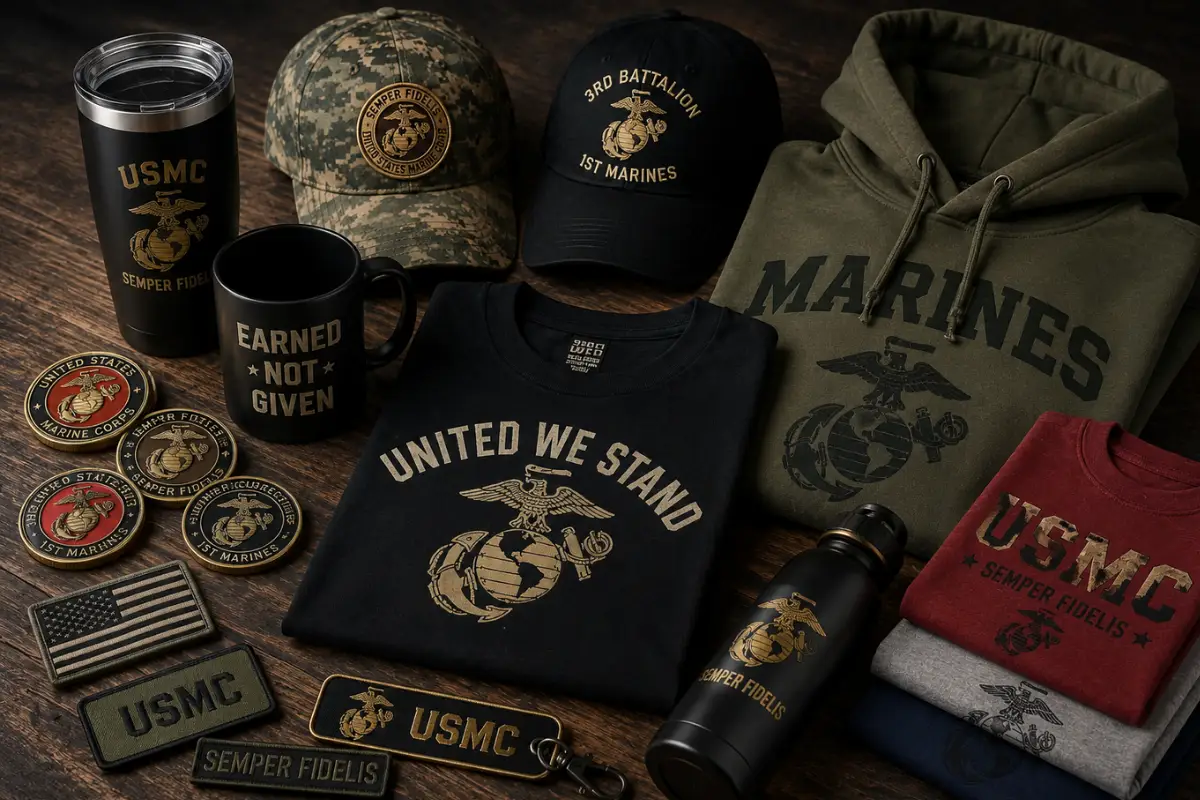
Most groups choose the item first and work out everything else afterward. That is the wrong way round, and it is why fundraising merchandise so often ends up in a box under somebody’s desk instead of raising what it was supposed to raise.
Which item you pick is not a matter of taste. Some products are built for this and some are not, and the difference has almost nothing to do with which one looks best on a mockup. We supply custom merchandise for military organizations, and the pattern across a lot of these orders is consistent enough to be worth writing down.
The short version
Five characteristics separate something that moves from something that does not. None of them are about how the item looks.
| Item | Why it works | What to watch |
|---|---|---|
| Custom coins | No sizes, instantly recognizable, keeps indefinitely and sells again next year | Design detail. Fine text needs room to strike cleanly |
| Tumblers | Daily use, high perceived value, still no sizing to manage | Moves more slowly than coins because the commitment is bigger |
| Ceramic mugs | Familiar, easy to hand over, ends up on a desk where people see it | Heavy and breakable. Storage and transport are real considerations |
| T shirts | The widest appeal of anything on this list and the most visible afterward | Sizes, which is a big enough problem to have its own section below |
| Hoodies | The item people keep longest and wear for years | The largest ask of any buyer, so it reaches fewer of them |
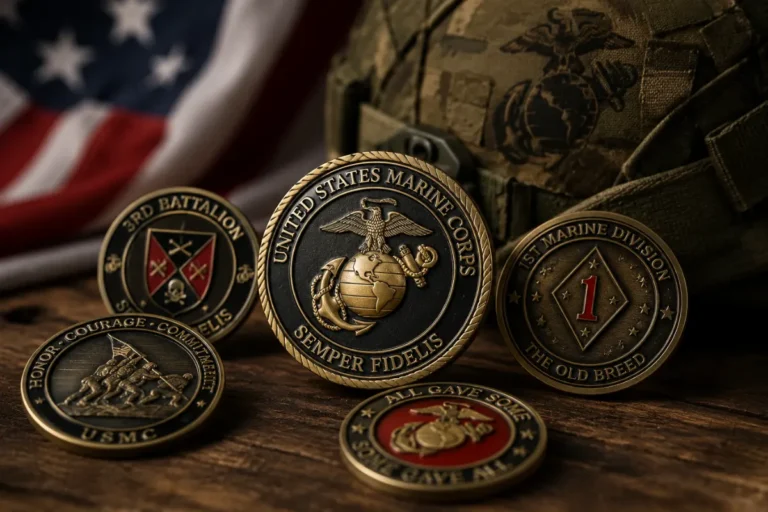
Custom coins are the default answer for most groups, and the reasons are all in that first column: nothing to choose, nothing to size, and an unsold coin is simply a coin you sell at the next event. Our guide to how a custom coin is produced covers the design side properly. Tumblers work well where the group will use them daily, coffee mugs are the easiest thing on the list to hand across a table, and custom shirts reach the most people of anything here as long as you have solved the next section first.
With a coin, every buyer receives the same object. With a shirt, every buyer makes a decision, and those decisions have to be collected, recorded and closed before anything can be ordered. That is the whole difference, and it is why groups that have run both will tell you the apparel campaign took four times the effort.
The workable approach is a single shared sheet with a hard close date that you actually hold. Do not estimate a size distribution for something people are choosing themselves, because a campaign is not the same as an issued run where you can plan a spread across a known roster. If the group is large or scattered, that alone is a reason to look at an item without sizes. Our apparel guide covers minimums and decoration methods in detail, and both change depending on the garment you land on.
Every item carries a minimum order, and it varies by product and by how the design is applied. Ask what yours is before you announce the campaign rather than after, because a minimum discovered in week three is what forces a group to change items halfway through and lose its momentum. A quick conversation with a producer who has quoted a lot of these runs takes ten minutes and saves that entirely.
| Stage | Typical duration | Note |
|---|---|---|
| Artwork and proof | 3 to 7 days | Faster when you supply usable vector artwork |
| Approval | 1 to 5 days | One named approver, not a committee |
| Production | 10 to 20 business days | Varies by item and by decoration method |
| Shipping | 3 to 7 days | Domestic ground |
| Total | 5 to 7 weeks | And then your selling window sits on top of that |
That last line is the one groups miss. Production is the predictable half. The selling window is the half that always takes longer than anyone planned, so if there is an event at the end of this, work backward from the event and give the campaign more room than feels necessary. When you know the item and the date, get a quote on your run.
For an event you order against a headcount you control. For a campaign you order against demand you are predicting, and that changes three practical things about the order itself. Allow spares in the variants people actually choose rather than an even spread. Keep the artwork simple enough that a second run matches the first exactly, because a reprint that looks slightly different is worse than not reprinting at all. And decide at the start how many pieces are going out as recognition or gifts rather than sales, so that number is planned instead of discovered at the end.
Worth confirming early
Tell us the group, the occasion, and the date you are working toward. The team that will quote it will tell you which items suit that combination, and which ones tend to still be in a box in March. Contact our team before the group has decided anything, because the item is easier to choose with the constraints on the table.
Fundraising is normally run through a properly constituted organization rather than by a unit in its official capacity: a unit association or private organization, a ball committee under an approved fund, or a veteran or nonprofit group. Rules on soliciting from subordinates and on workplace activity apply. Check with your command and your installation legal office before planning.
Coins if the group is large, scattered, or new to this, because there is nothing to size and nothing to chase. Apparel if the group is tight enough that collecting sizes is realistic and you want something visible long after the event.
One shared sheet, filled in by the buyers themselves, with a close date you hold. Do not estimate a size spread for a campaign the way you would for an issued run, because people choosing for themselves do not distribute the way a roster does.
Yes, and it depends on the item and on how the design is applied. Ask what the minimum is before you announce the campaign, because discovering it late is what forces groups to switch items midway and lose momentum.
Your organization supplies and authorizes its own artwork, and protected emblems should be cleared before the proof is approved. Selling items raises the question more sharply than issuing them internally, so settle it at the start.
Allow five to seven weeks from artwork approval to delivery, then add your selling window on top. If there is an event at the end, work backward from the event date and give the campaign more room than seems necessary.